- who we are
GREEN E GROUP
Frequently Asked Questions
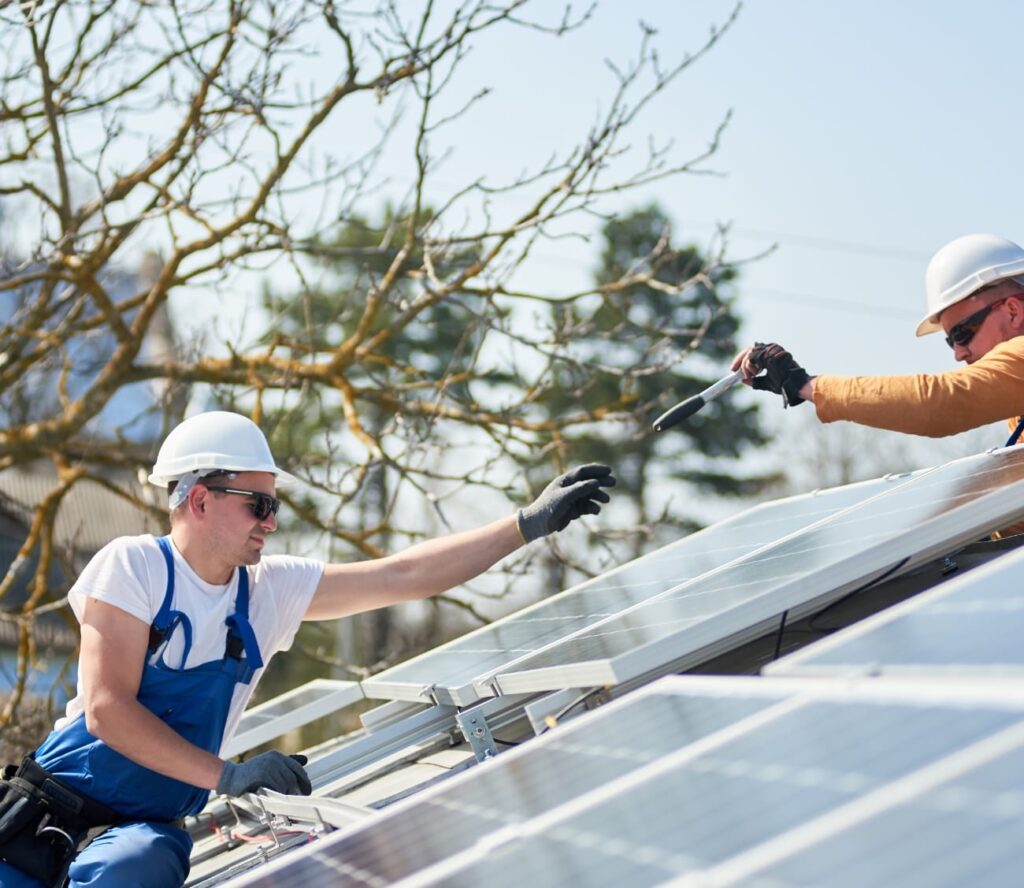
Solar panels on your roof capture sunlight using photovoltaic cells, converting it into direct current (DC) electricity. An inverter then transforms this DC power into alternating current (AC) electricity, which safely powers your home's appliances.
A comprehensive smart home electricity solution integrates EV chargers and heat pumps with a central smart panel to optimize high-drain appliances automatically. Adding a battery storage system captures surplus solar energy, allowing you to power your home or charge your electric vehicle during expensive peak hours or utility blackouts.
Yes, you can add more solar panels, but success depends on two critical factors: rooftop space and inverter capacity. First, your available rooftop space must feature the correct orientation and shading profiles to accommodate new modules physically. Second, your current inverter capacity dictates whether the existing unit can manage the increased electrical output. If the inverter is already maxed out, you need to upgrade it.
The Battery Disconnect Unit (BDU) serves as the primary high-voltage control switch and safety system for a battery pack, which monitors for electrical faults. In the event of an overcurrent, short circuit, or vehicle collision, it instantly cuts off the power connection to prevent catastrophic damage and protect occupants.
Solar panels operate on sunlight, not heat, so cold winter temperatures actually make them more efficient at converting light into electricity. However, the overall daily energy yield decreases because the sun is lower in the sky and there are fewer total hours of sunshine. Heavy cloud cover will lower production further, but the panels will still generate some power from diffuse light.